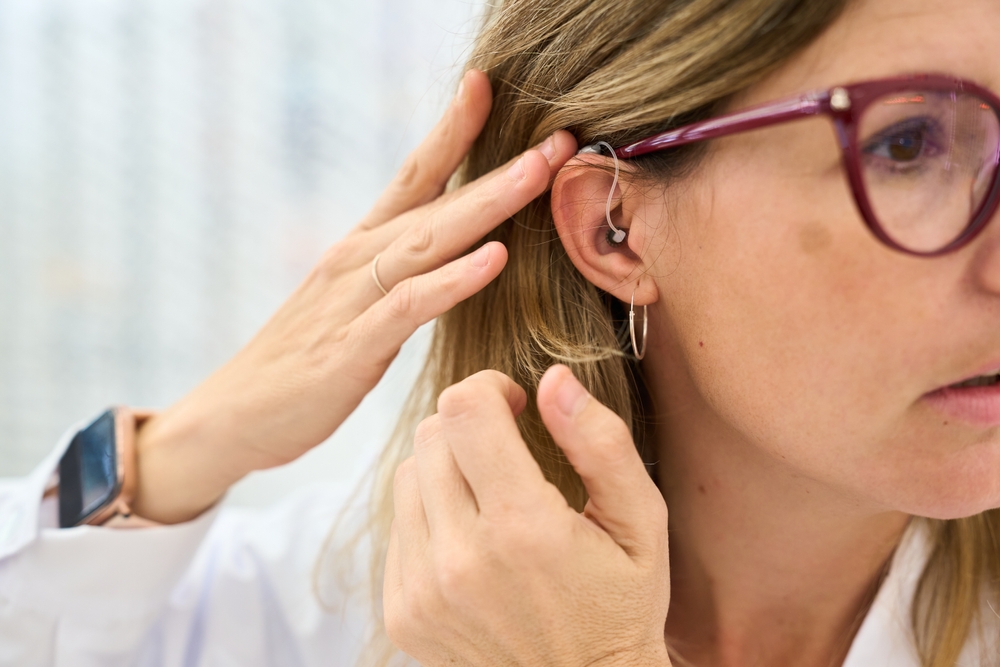
It is incredibly common for individuals to resist getting hearing instruments simply because they dread a bulky appearance or an uncomfortable fit. And that’s completely understandable! In some cases, people even worried that they might be left out of conversation altogether by others who assumed they wouldn’t be able to hear or comprehend.
This obsolete perception remains deeply embedded in the public consciousness, creating a massive barrier to proactive treatment. However, contemporary medical engineering has ensured that current hearing solutions look and function in a completely unexpected manner. Revolutionary breakthroughs in micro-component miniaturization and ergonomic design have rendered these devices incredibly compact, ultra-lightweight, and virtually unnoticeable.
If you have spent years avoiding an audiologist due to the appearance of old devices, now is the perfect moment to explore today’s sleek alternatives!
The Hearing Aid You’re Picturing Doesn’t Really Exist Anymore
When most individuals conjure an image of assistive listening technology, they envision a massive beige plastic chassis hooked over the pinna and obvious to everyone nearby. If that description matches your mental model, your perceptions are anchored in the primitive analog technology of the late twentieth century.
Since then, the entire category has evolved. Exponential leaps in digital circuit shrinking, industrial design, and audio computing have totally redefined contemporary hardware. Current product lines are incredibly compact, architecturally clean, and purpose-built to harmonize with your features or sit entirely out of sight.
A substantial percentage of contemporary options reside deep within the auditory canal, ensuring absolute invisibility during routine face-to-face interactions. Different configurations sit comfortably behind the ear but feature such a low profile and featherweight build that observers naturally miss them.
Navigating Modern Hearing Technology: The Three Core Styles Evaluated
If you are curious about the structural choices available for your rehabilitation, here is an accessible overview of current styles:
Invisible-in-Canal (IIC) Technology
These are as discreet as it gets. Engineered to rest deep inside the ear canal, IIC systems are individually molded to match the precise contours of your ear. Spoken interactions at arm’s length occur without anyone realizing a medical device is present. This configuration is highly favored by individuals managing mild-to-moderate auditory drops who demand total aesthetic secrecy.
Receiver-in-Canal (RIC) and Receiver-in-the-Ear (RITE) Designs
This is the most common style today. A micro-housing rests behind the upper pinna, transferring processed sound via an ultra-fine, translucent micro-wire to an acoustic driver nestled inside the canal. To a casual observer, their clean lines often mimic high-end commercial wireless earbuds. Surrounding individuals will remain completely unaware of the technology unless they actively look for it.
Streamlined Behind-the-Ear (BTE) Systems
These sit fully behind the ear and are slightly larger, but they’re still far more streamlined than older versions. They’re often recommended for more significant hearing loss and offer excellent performance without the bulky appearance people expect.
Ultimately, contemporary hearing aids are built to empower your daily routine rather than broadcast a medical condition to the world.
Modern Hearing Aids: Looking Better and Doing a Lot More
The changes in modern hearing aids aren’t just cosmetic. Today, they function more like smart devices than traditional medical equipment. Most current systems boast universal wireless syncing, channeling smartphone calls, high-definition music, and television broadcasts directly to your internal receivers.
Through proprietary mobile apps, patients can effortlessly adjust acoustic thresholds or modify directional settings completely hands-free. Say you’re walking into a noisy restaurant: You can fine-tune your hearing to match the environment in seconds. Convenient overnight charging systems have permanently replaced the tiny disposable batteries that patients traditionally struggled to replace. The process is as simple as placing the units into their charging dock each night, identical to charging your cell phone.
Overcoming the Psychological Barriers to Better Hearing
Even with this encouraging information, taking the initial step toward treatment can induce anxiety. Exploring hearing aid options can be challenging on a mental and emotional level because it’s an admission that our hearing isn’t what it used to be. This can make us feel helpless and like we aren’t fully in control of what’s happening to our bodies.
But here’s a different way to look at it: Hearing aids aren’t a sign that something has gone wrong. They are merely an intelligent adaptation to a universal milestone of aging that impacts us all eventually. Choosing to hear better is absolute evidence that you are choosing to optimize your body and enhance your overall quality of life.
Imagine wearing a discreet, barely (if at all) visible device and finally being able to follow along in conversation, hear better in crowds, and focus on the things that really interest you. That level of sensory restoration is incredibly liberating!
Experience Contemporary Hearing Technology Firsthand
The most effective method to permanently banish an obsolete stereotype is to personally examine current clinical options. Our clinical team cordially invites you to visit our facility, interview our staff, and evaluate different form factors in a stress-free, zero-obligation environment. Treat this as a risk-free exploratory step to comprehend the incredible aesthetic shift that has occurred in our field.
The overwhelming majority of our patients leave their consultation thoroughly amazed by the compact scale, luxurious comfort, and acoustic clarity of current technology! Reach out to our administrative team or visit our website right now to book your personal demonstration.
