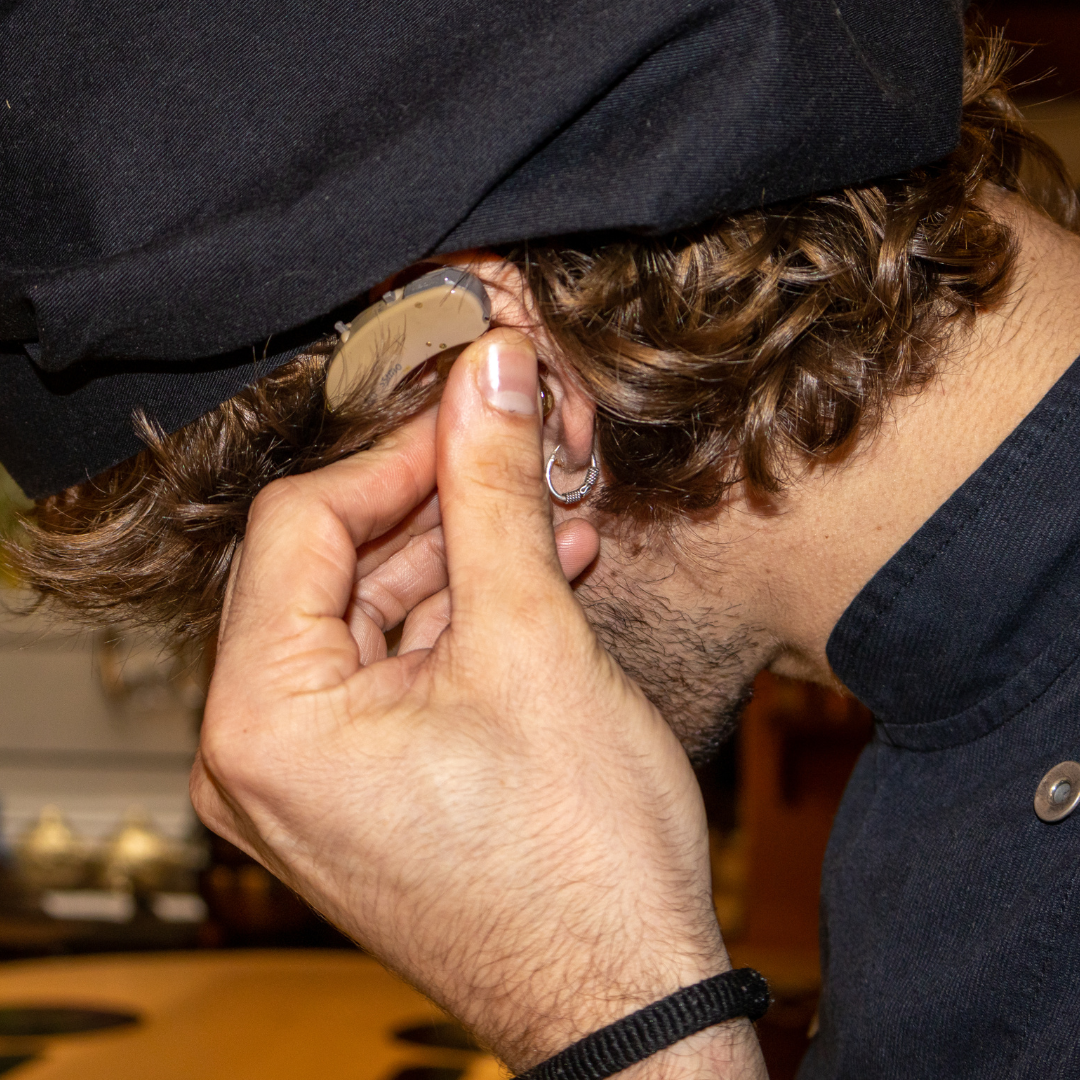
Active restaurant conversations are frequently hard to decipher when surrounding background noise clashes with your hearing. Our specialists can evaluate hearing under both calm and noisy listening conditions to establish why noisy rooms present such difficulty. After diagnosing the source of your difficult hearing, we design targeted interventions tailored to your listening needs.
Explaining Normal Quiet Hearing Versus Restaurant Listening Fatigue
A tranquil environment produces a beneficial signal-to-noise ratio where spoken dialogue easily overpowers weak ambient noise. Modern restaurant environments create the complete opposite listening environment. Overlapping chatter, piped music, kitchen clatter, and hard-surface reverberation mask speech, forcing the brain to expend immense cognitive effort to track conversation.
This problem can occur with high-frequency hearing loss, auditory-processing difficulty, or age- and noise-related changes. Cognitive exhaustion, physical fatigue, low ambient lighting, and increased distance from your conversational partner further compound the challenge. Numerous individuals show standard hearing thresholds on paper but reveal marked comprehension drops on clinical speech-in-noise testing. Consistent difficulty following restaurant conversation warrants clinical investigation even when everyday hearing seems largely unaffected.
Clinical Evaluation of High-Frequency Hearing Loss
We initiate evaluation by exploring challenging acoustic environments, acoustic trauma history, subjective tinnitus, prescription drug profiles, and unilateral ear changes.
Through pure-tone audiometry, we determine your faintest auditory perception across low to high pitches utilizing both air and bone conduction testing. High-frequency hearing loss commonly presents on the audiogram as a characteristic precipitous drop in the higher frequency ranges. Extended test batteries incorporate acoustic tympanometry to rule out middle-ear pathology along with suprathreshold word-recognition testing.
Given that isolated quiet booths do not reflect chaotic restaurant acoustics, specialized speech-in-noise testing delivers invaluable diagnostic data. The test assesses word and sentence discrimination as background acoustic competition intensifies. Together, these audiological findings indicate whether the issue involves sound audibility, speech intelligibility, noise-processing dysfunction, or multiple compounding factors.
Auditory Processing Disorders: Impact on Adult Communication
An auditory processing disorder affects how the central auditory nervous system interprets sound. The ears may detect tones at expected levels, but the brain may have difficulty organizing competing signals, distinguishing similar speech sounds, or following rapid conversation. We first evaluate peripheral hearing and then determine whether an individualized auditory-processing test battery or referrals to other professionals are appropriate.
Actionable Listening Tips for Noisy Social Settings
Minor environmental adjustments can boost speech acoustic signals and supply critical visual lip-reading cues. Prioritize dining at establishments designed with subdued acoustics or reserve tables during non-peak business hours. Dining locations utilizing sound-absorbing elements like booths, felt panels, window curtains, and carpet offer better acoustics than high-ceilinged rooms with hard surfaces.
At the restaurant:
- Request a table away from the kitchen, bar, speakers, and large groups.
- Position yourself with your back toward a solid partition to dampen intrusive background noise from behind.
- Face your speaking partners directly in well-illuminated seating to maximize visual speech cues.
- Sit as close to the speaker as comfort permits to preserve speech volume and clarity.
- Turn your better-hearing ear toward the specific speaker you want to hear most clearly.
- Request that companions rephrase misunderstandings using different words rather than repeating the same sentence.
- Verifiably confirm essential conversational facts instead of bluffing comprehension.
- Step into a quiet area for a few minutes when listening fatigue begins to compromise focus.
- Request that friends speak with crisp clarity rather than speeding through dialogue.
- Elevated yelling distorts auditory signals and seldom improves actual phonetic comprehension.
Advanced Technology for Hearing in Background Noise
Optimal technological solutions depend entirely on the etiology of your symptoms, target acoustic spaces, and whether measurable hearing loss exists. Prescription hearing aids fitted by an audiologist leverage directional microphone arrays, advanced digital noise reduction, and dedicated restaurant programs to focus on frontal speech while dampening background sound. Patients must uphold realistic expectations because modern amplification cannot strip out every ambient human voice completely.
Remote wireless microphones offer an exceptional boost to the signal-to-noise ratio in challenging venues. The remote unit is attached to the speaker’s clothing or placed nearby, transmitting that voice straight into compatible hearing aids or an audio receiver. This wireless transmission substantially diminishes the acoustic degradation caused by physical distance and ambient room noise.
Other clinically valuable tools include:
- Wireless conference table microphones that capture multi-speaker discussions
- Integrated telecoil programs for tapping into venue-wide induction loop systems
- Smartphone speech-to-text or live-captioning applications
- Advanced hearables incorporating assistive directional listening programs
- Sound-level or restaurant-review tools for finding quieter locations
We evaluate these technological options, ensure full hardware compatibility, and instruct you on maximizing your selected system.
Professional Audiological Solutions for Loud Listening Environments
Undergoing a formal hearing evaluation takes your care beyond the limited baseline of hearing adequately in quiet spaces. We analyze the exact social venues, voice registers, and noise environments that cause difficulty to administer tests matching your lifestyle. Testing routinely combines pure-tone audiometry, middle-ear impedance tests, speech discrimination, and speech-in-noise measures. Auditory-processing testing may be considered when the history and initial results support it.
Abrupt auditory reductions, unilateral hearing shifts, or rapid functional deterioration require prompt assessment by an ear, nose, and throat physician. Individualized diagnostic care pinpoints the precise physiological etiology rather than merely blaming restaurant noise for communication struggles.
Request an Audiology and Hearing Evaluation Today
If noisy restaurant gatherings leave you struggling to follow dialogue, pulling away, or feeling completely drained, schedule an audiological evaluation with our team. We can evaluate targeted solutions to optimize your hearing in noisy environments using prescription hearing aids, assistive listening technology, or communication strategies tailored to you.
Contact our audiology office today to schedule your evaluation and move toward effortless, confident conversations.
